


Tattoo Trend in Pakistan: A Rising Fashion Against Islamic and Cultural Values

A Trend Written on the Skin
Not too long ago, tattoos were almost unheard of in Pakistan — whispered about in hushed tones, associated with sailors, criminals, or outsiders. Today, however, one only needs to walk down Zamzama in Karachi, MM Alam Road in Lahore, or F-7 Markaz in Islamabad to find tattoo parlors openly advertising their services.
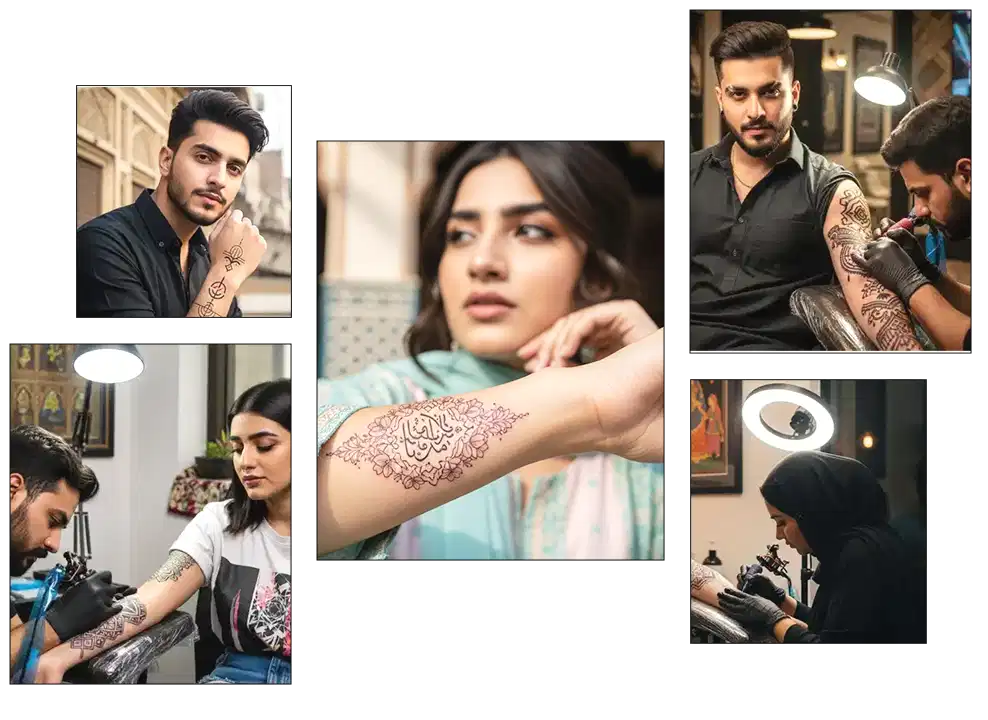
Instagram and TikTok feeds of Pakistani youth are filled with influencers showing off intricate designs — from minimalist line art on wrists to elaborate sleeves inspired by Western celebrities. For many, it is a statement of self-expression, individuality, and rebellion against tradition.
But beneath the surface of this inked trend lies a growing concern: tattoos, while fashionable in the West, stand in sharp contradiction to Pakistan’s religious values, cultural norms, and social expectations.
This article takes a closer look at the tattoo trend in Pakistan, tracing its roots, examining its rise, and critically evaluating its clash with Islam, Pakistani culture, health concerns, and social consequences.
A Brief History: From Ancient Rituals to Instagram Aesthetics
Tattoos are not a modern invention. Anthropologists have found evidence of tattooing in cultures as far back as 5,000 years, with Ötzi the Iceman (discovered in the Alps) carrying tattoo marks dating back to 3,200 BCE. In ancient societies, tattoos served different purposes — tribal identity, spiritual protection, or even as marks of punishment.
In South Asia, tattoos (locally called godna) were common among certain nomadic and tribal communities, particularly in India. Women in rural areas sometimes used them as symbols of resilience, beauty, or belonging to a particular clan.
However, in Muslim-majority societies like Pakistan, tattooing was never mainstream. Unlike henna, which is temporary and celebratory, tattoos are permanent and therefore considered a violation of the human body as a divine trust from Allah.
The current wave of tattoos in Pakistan is not rooted in indigenous practices. Instead, it is an imported trend — fueled by Western pop culture, globalized fashion, and the explosion of social media.
The Rise of Tattoo Culture in Urban Pakistan
1. Tattoo Parlors in Major Cities
A decade ago, tattoo artists in Pakistan operated underground, catering to a select few. Today, businesses like Karachi Ink and Lahore Tattoo Studio openly advertise on Facebook and Instagram. Tattoo expos, once unimaginable, are quietly held for enthusiasts.
Prices range from Rs. 5,000 for a small design to over Rs. 50,000 for elaborate sleeves, signaling a growing clientele with disposable income — often from the middle and upper-middle classes.
2. Social Media Influence
Platforms like Instagram, TikTok, and YouTube play a decisive role. Young influencers such as lifestyle vloggers and musicians proudly display tattoos, framing them as markers of modernity and confidence.
Hashtags like #TattooPakistan now generate thousands of posts, showcasing a youth culture that sees body art as fashionable rather than forbidden.
3. Global Pop Culture Impact
From David Beckham to Rihanna, global celebrities have normalized tattoos as symbols of beauty, success, and identity. Pakistani youth, deeply connected to global entertainment, emulate these trends — often without considering their cultural and religious implications.
Tattoos in Islam: A Clear Prohibition
Islamic scholars have consistently maintained that tattooing is haram (forbidden). The Prophet Muhammad (PBUH) said:
“Allah has cursed those women who practice tattooing and those who get themselves tattooed, and those who remove their face hairs, and those who create a space between their teeth artificially to look beautiful, and such women as change the features created by Allah.”
— (Sahih al-Bukhari, Hadith 5931)
This hadith, reported in multiple authentic collections, leaves little room for ambiguity. The act of tattooing is seen as altering Allah’s creation unnecessarily, an act of vanity that Islam prohibits.
Some young Pakistanis argue that “modern tattoos are different,” or that “Islamic calligraphy tattoos” show devotion. Scholars strongly disagree, pointing out that inscribing Qur’anic verses or Allah’s name on body parts that may be exposed to impurity (such as during ablution or using the restroom) is deeply disrespectful and impermissible.
Tattoos and Pakistani Culture: A Clash of Values
Pakistan, unlike secular states, was created on the ideological foundation of Islam. Its constitution explicitly affirms that laws must conform to Sharia. Therefore, tattoos are not merely a private choice; they clash with the cultural and spiritual identity of the nation.
1. Modesty vs. Rebellion
Pakistani culture emphasizes modesty, respect for elders, and communal harmony. Tattoos, however, are often seen as rebellious, individualistic, and immodest — values that run counter to family and social norms.
2. Marriage Prospects
In a society where arranged marriages remain common, tattoos can significantly harm an individual’s prospects. Families may interpret visible tattoos as a sign of rebellion, poor judgment, or a lack of religious upbringing. Several anecdotal cases in Karachi and Lahore suggest that potential marriage proposals have been withdrawn after families discovered the prospective bride or groom had visible tattoos.
3. Professional Stigma
In conservative workplaces — from banks to government offices — tattoos can create barriers. Employers may perceive them as unprofessional or incompatible with Pakistan’s formal work culture. Unlike the West, where tattoos are increasingly accepted, in Pakistan, they remain a social liability.
Health Risks: Beyond the Aesthetic Appeal
Tattooing is not without health hazards. Medical experts in Pakistan warn of multiple risks:
- Infections: Non-sterile equipment can transmit hepatitis B, hepatitis C, or HIV.
- Allergic Reactions: Some inks cause permanent rashes or skin conditions.
- Keloids: Tattoos may trigger abnormal scarring.
- Complicated Removal: Laser removal is expensive (over Rs. 100,000 for large tattoos), painful, and not always effective.
In 2022, doctors at Jinnah Hospital, Karachi, reported cases of severe skin infections linked to amateur tattoo parlors operating without licenses or hygiene protocols.
The Psychological Angle: Identity and Rebellion
Why do Pakistani youth, knowing the religious prohibitions and cultural stigma, still embrace tattoos? Psychologists suggest several reasons:
- Search for Identity: In a globalized world, tattoos offer a sense of individuality.
- Rebellion Against Tradition: For some, tattoos are a way of challenging conservative norms.
- Peer and Influencer Pressure: Social media validation can drive decisions, especially among teenagers.
- Emotional Expression: Tattoos often mark life events — heartbreak, friendship, or loss.
But what seems like empowerment often results in regret. A 2021 UK study revealed that over 25% of people regret their tattoos within 10 years. In Pakistan’s conservative context, regret may be even higher due to social and family backlash.
Case Studies: Tattoos in the Pakistani Spotlight
- Celebrities: A few Pakistani musicians and models have publicly displayed tattoos, sparking controversy. In 2021, a local singer faced backlash after revealing a large tattoo on Instagram, with followers accusing him of “promoting Western obscenity.”
- Students: In universities in Lahore and Karachi, tattooed youth often face disapproval from faculty or peers, highlighting the social divide between liberal and conservative circles.
- Hidden Tattoos: Many Pakistanis opt for tattoos in hidden areas, balancing their desire for body art with fear of social judgment — a telling reflection of Pakistan’s cultural contradictions.
The Role of Parents, Educators, and Religious Leaders
To address this growing trend, condemnation alone will not suffice. Parents and teachers need to engage in open dialogue with youth, explaining not just the religious prohibitions but also the practical, health, and social consequences of tattoos.
Religious leaders should emphasize that Islam provides ample avenues for self-expression — through art, poetry, knowledge, and service — without altering one’s body. At the same time, communities must offer young people alternative outlets for identity and creativity.
Tattoos as a Test of Identity
The tattoo trend in Pakistan is more than a fashion statement; it is a cultural test. Will Pakistan’s youth embrace fleeting Western fads at the cost of faith and tradition, or will they find ways to express individuality within the framework of Islam and Pakistani values?
As history shows, societies that lose touch with their moral and cultural roots risk drifting into identity crises. Tattoos may fade with time, but the values they challenge — modesty, piety, and respect for divine creation — remain eternal.
It is time for Pakistan to reflect: should self-expression come at the cost of faith, family, and culture?
At PakTV.pk, we continue to explore these social transformations, providing clear, balanced, and critical insights for a nation at the crossroads of tradition and modernity.

Other Articles