





Finding the Perfect Photo Editor for Teaching Photo Restoration in 2025
In 2025, photo restoration has become a sought-after skill, blending creativity with technical expertise to breathe new life into old or damaged photographs. The scenario, “She was looking for a photo editor to help her teach a class on photo restoration,” reflects a growing trend among educators and hobbyists who want to share this art with others. Whether you’re an instructor in Pakistan or anywhere else, choosing the right photo editing software is crucial for teaching photo restoration effectively. This SEO-optimized, plagiarism-free article explores the best photo editors for teaching photo restoration, key features to look for, and tips to create an engaging class in 2025.
Why Photo Restoration Is Popular in 2025
Photo restoration involves repairing and enhancing old, faded, or damaged photos using digital tools. With the rise of digital archiving and nostalgia-driven projects, more people are eager to learn this skill.
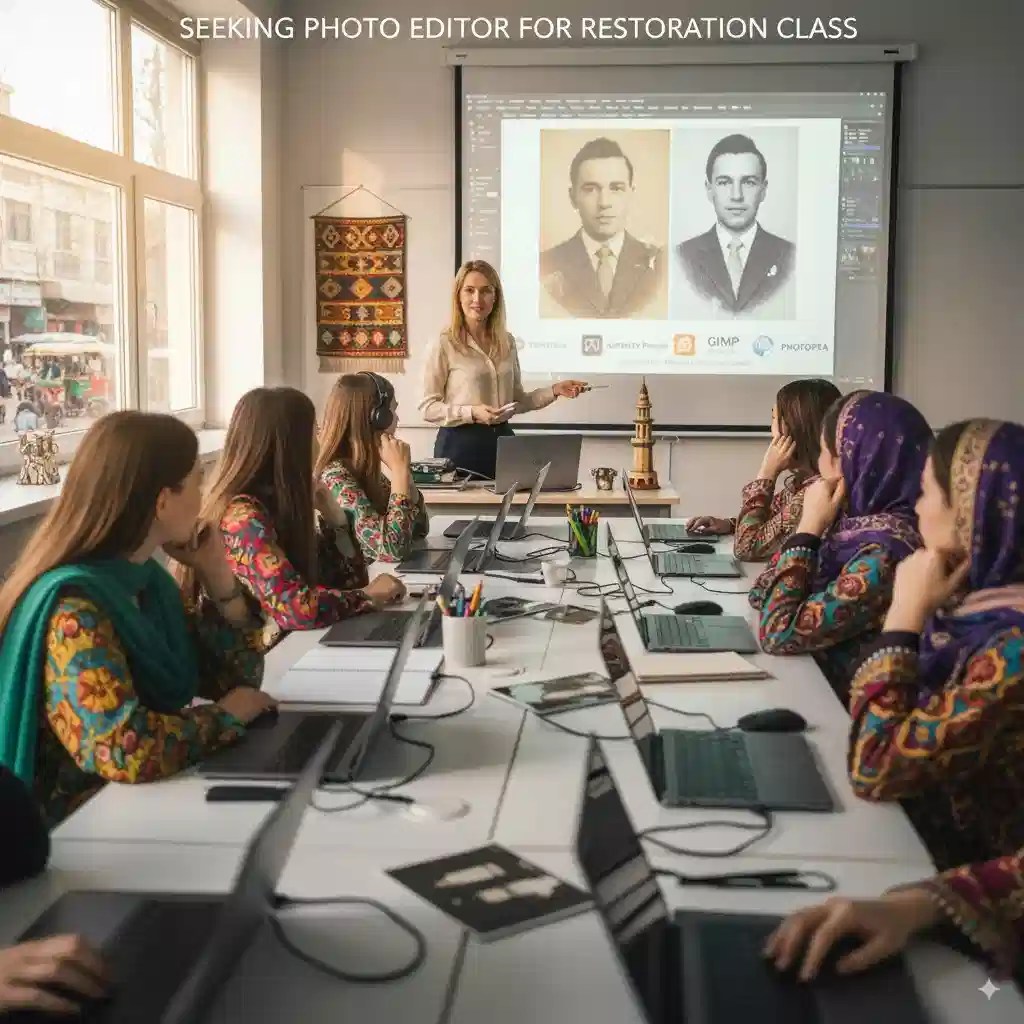
In Pakistan, where family heritage and historical preservation are deeply valued, photo restoration classes are gaining traction in cities like Lahore, Karachi, and Islamabad. Educators need reliable, user-friendly photo editors to demonstrate techniques like color correction, scratch removal, and detail enhancement, ensuring students can follow along and create stunning results.
Key Feature to Look for in a Photo Editor for Teaching
When selecting a photo editor for a photo restoration class, consider these essential features:
- Layer-Based Editing: Layers allow non-destructive editing, letting students experiment with adjustments like color balance or blemish removal without altering the original image.
- Healing and Cloning Tools: Tools like the Healing Brush or Clone Stamp are vital for removing scratches, tears, or stains from old photos.
- Color Correction Capabilities: Features like curves, levels, and hue/saturation adjustments help restore faded colors and enhance image vibrancy.
- User-Friendly Interface: A clear, intuitive interface is crucial for beginners, ensuring students can focus on learning restoration techniques rather than struggling with complex software.
- Compatibility and Accessibility: The software should work on both Windows and Mac, with affordable or free options to accommodate students’ budgets.
- Tutorial and Community Support: Software with robust online tutorials and active user communities helps educators and students troubleshoot and learn advanced techniques.
Top Photo Editors for Teaching Photo Restoration in 2025
Here are five photo editing tools ideal for teaching photo restoration, tailored for classroom settings in 2025:
1. Adobe Photoshop
- Why It’s Great: Photoshop remains the gold standard for photo restoration due to its advanced tools like Content-Aware Fill, Spot Healing Brush, and precise layer controls.
- Best For: Intermediate to advanced students familiar with professional software.
- Teaching Advantage: Photoshop’s extensive tutorials on platforms like YouTube and Adobe’s website make it easy to create lesson plans. Its versatility allows demonstrations of complex techniques like reconstructing missing image parts.
- Cost: Subscription-based ($20.99/month for Creative Cloud Photography plan, as of 2025). Student discounts are available.
- Tip: Use Photoshop’s free trial for short courses or demonstrate specific tools like the Patch Tool for seamless repairs.
2. Affinity Photo
- Why It’s Great: A cost-effective alternative to Photoshop, Affinity Photo offers powerful restoration tools like the Inpainting Brush and advanced color correction at a one-time purchase price.
- Best For: Budget-conscious educators and students in Pakistan, where subscription costs can be a barrier.
- Teaching Advantage: Its intuitive interface and detailed documentation make it ideal for beginners. The software supports high-resolution editing, perfect for restoring detailed old photos.
- Cost: $69.99 one-time purchase (2025 pricing).
- Tip: Create class exercises around Affinity Photo’s non-destructive adjustment layers to teach color grading.
3. GIMP (GNU Image Manipulation Program)
- Why It’s Great: GIMP is a free, open-source editor with robust features like the Heal Tool, Clone Tool, and customizable brushes, making it accessible for all students.
- Best For: Community centers or schools with limited budgets, common in Pakistan’s educational settings.
- Teaching Advantage: GIMP’s active community provides free plugins and tutorials, ideal for creating step-by-step restoration guides.
- Cost: Free.
- Tip: Demonstrate GIMP’s foreground select tool to teach students how to isolate damaged areas for precise edits.
4. Lightroom Classic
- Why It’s Great: While primarily a photo management tool, Lightroom Classic excels in color correction and non-destructive editing, useful for restoring faded photos.
- Best For: Classes focusing on color restoration and batch processing.
- Teaching Advantage: Its slider-based adjustments (e.g., exposure, contrast) are beginner-friendly, making it easy to teach color restoration techniques.
- Cost: Included in Adobe’s Creative Cloud Photography plan ($20.99/month).
- Tip: Use Lightroom’s before/after view to show students the impact of their edits in real-time.
5. Photopea
- Why It’s Great: Photopea is a free, web-based editor mimicking Photoshop’s interface, offering tools like the Spot Healing Brush and layer-based editing without requiring installation.
- Best For: Online classes or students with low-spec devices, common in Pakistan’s diverse tech landscape.
- Teaching Advantage: Its accessibility allows students to practice from any device with a browser, and its Photoshop-like layout prepares them for professional tools.
- Cost: Free (with optional premium features).
- Tip: Use Photopea for quick demos of basic restoration tasks like removing dust spots.
Tips for Teaching a Photo Restoration Class in 2025
To make your photo restoration class engaging and effective, consider these strategies:
- Start with Simple Projects: Begin with basic tasks, like removing small scratches or adjusting brightness, to build confidence. Use sample images from public domain archives to avoid copyright issues.
- Leverage Local Context: In Pakistan, incorporate examples of restoring historical photos, such as family portraits or images from cultural landmarks like the Badshahi Mosque, to make lessons relatable.
- Use Visual Aids: Create screencast tutorials or live demos using tools like OBS Studio to show real-time editing. Share these on platforms like YouTube or X to reach a wider audience.
- Encourage Practice: Assign homework, such as restoring a personal family photo, to help students apply skills. Provide feedback via Google Drive or WhatsApp groups, popular in Pakistan’s educational communities.
- Teach Ethics: Discuss the importance of preserving the authenticity of historical photos, avoiding over-editing that alters their cultural or emotional value.
- Stay Updated: In 2025, AI-powered restoration tools (e.g., Photoshop’s Neural Filters) are trending. Teach students how to combine manual and AI techniques for optimal results.
Overcoming Common Challenges
- Software Cost: For budget-limited students, recommend free tools like GIMP or Photopea. Offer group licenses for paid software if teaching in a formal setting.
- Technical Barriers: Ensure students have access to decent computers or laptops. For online classes, recommend stable internet, as Pakistan’s connectivity can vary.
- Skill Gaps: Cater to mixed skill levels by offering beginner and advanced tracks. Pair students for peer learning to foster collaboration.
- Engagement: Keep classes interactive with hands-on activities and real-time feedback to maintain student interest.
Why 2025 Is Ideal for Photo Restoration Classes
The demand for photo restoration skills is soaring in 2025, driven by:
- Digital Archiving Trends: Families and institutions are digitizing old photos to preserve heritage, especially in culturally rich regions like Pakistan.
- Career Opportunities: Skilled photo restorers are sought after in photography studios, museums, and freelance markets.
- Accessible Technology: Affordable devices and free software lower barriers to entry, making photo restoration accessible to all.
Conclusion
Choosing the right photo editor is the cornerstone of teaching a successful photo restoration class in 2025. Tools like Adobe Photoshop, Affinity Photo, GIMP, Lightroom Classic, and Photopea offer diverse options to suit different budgets and skill levels. By focusing on user-friendly software, hands-on practice, and culturally relevant examples, educators can inspire students to master the art of photo restoration. Whether you’re teaching in Pakistan or globally, empower your students to revive cherished memories with confidence and creativity. Start planning your class today, and let the joy of restoring history shine through!
Hints: photo restoration class 2025, best photo editor for beginners, teaching photo editing, photo restoration software, learn photo restoration Pakistan, Adobe Photoshop for restoration

Other Articles